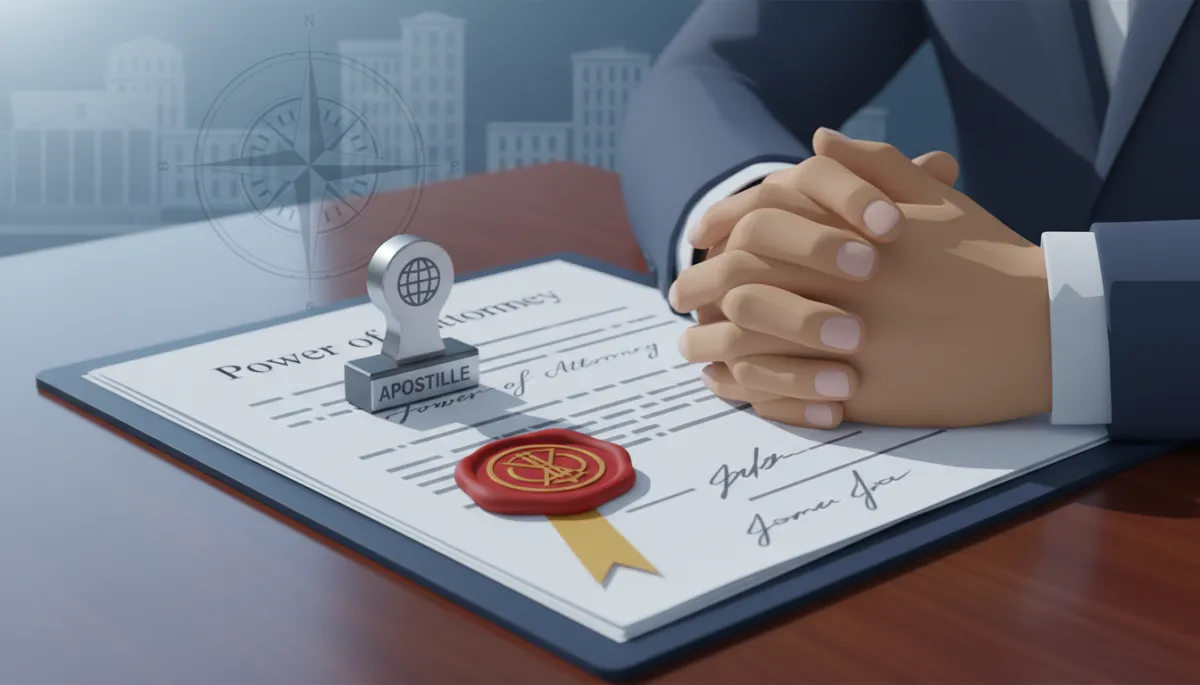
Apostille for Power of Attorney: A Practical Guide
Legalization, Apostille, Power of Attorney
Apostille for Power of Attorney Documents: A Practical Guide for Individuals
If you need to authorize someone to act on your behalf in another country, you will often hear one key phrase: apostille for a Power of Attorney (POA). This guide walks you, as a private individual, through what that means, when you need it, and how to get it done smoothly without getting lost in legal jargon.

Making Your Power of Attorney Valid Abroad
Understand when and how to obtain an apostille
What Is an Apostille and Why Does Your Power of Attorney Need One?
An apostille is a special certificate attached to a document to confirm that its signature, seal, or stamp is genuine. It does not change the content of your Power of Attorney, but it tells foreign authorities, “This document is officially recognized in the country where it was issued.”
Apostilles exist because of the Hague Apostille Convention, an international agreement that simplifies the way public documents are legalized between member countries. If both your country and the country where the POA will be used are members of this Convention, an apostille usually replaces the older, more complicated chain of embassy or consulate legalizations.
For individuals, this matters when you want to grant a Power of Attorney to handle things like selling property, managing a bank account, handling inheritance, or representing you before public offices in another country. Without an apostille, the foreign authority may simply refuse to accept your POA, even if it is perfectly valid in your home country.
When Do Individuals Typically Need an Apostilled Power of Attorney?
You may need an apostille for your Power of Attorney in many everyday cross-border situations. Common examples include:
Selling or buying property abroad: You live in one country but own a house, apartment, or land in another country and want a trusted person there to sign documents on your behalf.
Managing bank accounts or investments: Your bank or financial institution overseas asks for a POA so a representative can access or manage your account when you are not physically present.
Inheritance and estate matters: A relative passes away in another country, and you appoint a lawyer or family member there to handle paperwork, court appearances, or asset transfers for you.
Business representation: You are a small business owner or freelancer and need someone abroad to sign contracts, receive payments, or represent you in front of local authorities or partners.
Family and personal matters: A relative may need to act on your behalf to handle schooling, healthcare, or administrative tasks for a child or dependent in another country.
💡 Pro Tip: Before drafting your Power of Attorney, ask the receiving authority abroad (a notary, bank, lawyer, or registry) exactly what form they require and whether an apostille is mandatory. This can save you time, money, and repeat visits.
Step 1: Drafting and Signing Your Power of Attorney Correctly
The apostille process starts with a properly prepared Power of Attorney. If the POA itself is not accepted, the apostille will not help. For individuals, this usually means:
Having the Power of Attorney drafted or reviewed by a lawyer or notary who understands both your local law and, if possible, the requirements of the foreign country.
Making sure the document clearly identifies you (the principal) and the person you are appointing (the attorney-in-fact or agent), with full names, identification numbers, and addresses where appropriate.
Describing the powers you are granting as precisely as possible (for example, “to sell my apartment located at…” or “to manage my bank account no. … at … bank”).
Stating any time limits or conditions, such as a specific expiry date or that the POA is valid only for a particular transaction.
In many countries, a Power of Attorney that will be used abroad must be signed in front of a notary public. The notary verifies your identity and witnesses your signature. The apostille will later confirm the notary’s authority and signature, so choosing a properly licensed notary is essential.
Step 2: Understanding Who Issues Apostilles in Your Country
Each country that is part of the Hague Apostille Convention designates one or more Competent Authorities to issue apostilles. These are usually:
The Ministry of Foreign Affairs or a similar national body.
A Ministry of Justice or Interior for notarial and court documents.
Regional authorities such as state-level secretaries, courts, or government offices, especially in federal systems.
As an individual, you do not need to guess. A quick search on the official government website for “apostille” plus your country name, or a call to your local notary, will usually tell you exactly which office handles apostilles for notarial documents like Powers of Attorney. Always rely on official sources, not just private websites, to avoid outdated or incorrect information.
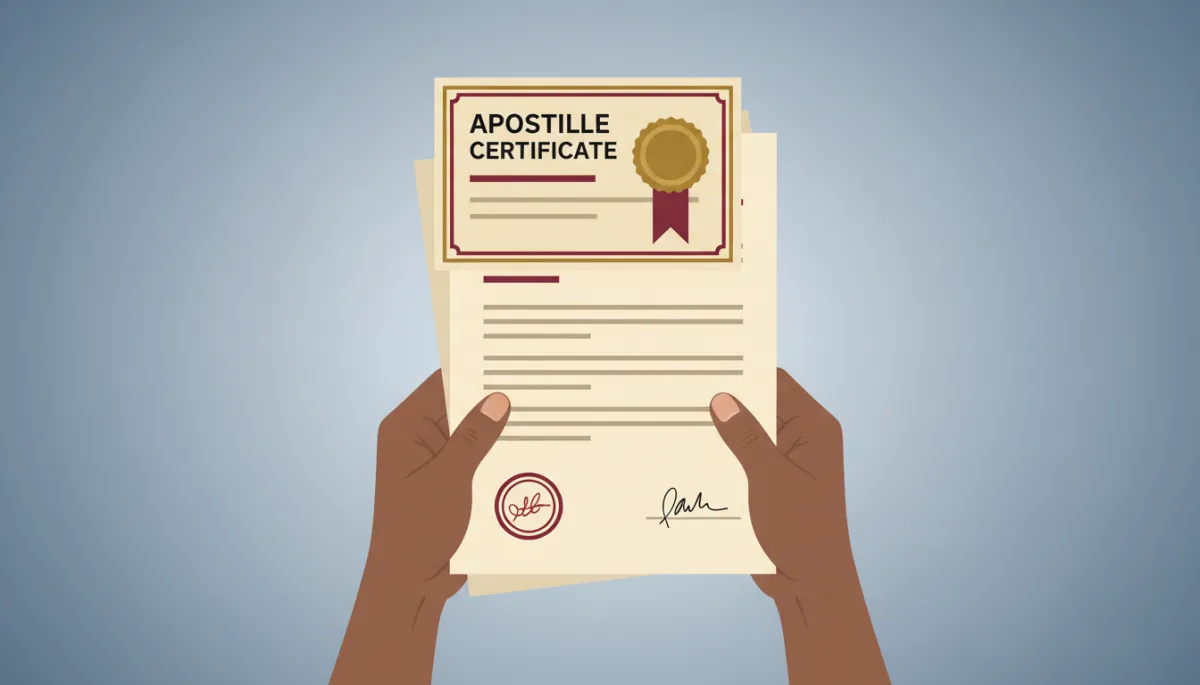
The apostille confirms that the notary’s signature and seal on your POA are officially recognized.
Step 3: The Practical Process of Getting an Apostille on Your POA
While details vary by country, the general process for individuals is similar. Typically, you will:
Have your Power of Attorney notarized. Bring your identification and sign the POA in front of a notary public. Check whether the notary must use any specific wording or format for documents intended for use abroad.
Submit the original notarized POA to the apostille authority. Some offices allow you to apply in person, by mail, or even online. You may need to complete an application form and indicate the country where the document will be used.
Pay the applicable fee. Fees can range from modest to fairly high, depending on your country and whether you use an express service. Keep receipts in case you need to track your application.
Receive the apostilled document. The authority will attach an apostille certificate, either as a stamp or a separate sheet, to your Power of Attorney. This combined package is what you send or present abroad.
Processing times can vary from same-day service to several weeks. If your transaction is time-sensitive, ask about expedited options or plan well in advance to avoid delays in property sales, court deadlines, or bank procedures.
⚠️ Warning: Do not detach or tamper with the apostille once it is attached. Removing staples, seals, or ribbons can invalidate the legalization and force you to repeat the process.
What If the Country Is Not Part of the Apostille Convention?
If the country where your Power of Attorney will be used is not a member of the Hague Apostille Convention, the process is different. In that case, an apostille usually is not enough or not applicable at all. Instead, your POA will often need:
Authentication by your national authority (similar to an apostille but not recognized under the Convention).
Legalization by the embassy or consulate of the destination country, often located in your home country.
This older method can involve multiple steps and take longer, but it serves a similar purpose: to reassure foreign authorities that your Power of Attorney is genuine. When in doubt, contact the consulate of the country where the document will be used and ask for their exact requirements for a POA signed abroad by a private individual.
Translation, Copies, and Other Practical Questions Individuals Ask
In real life, the apostille is only one part of making your Power of Attorney useful abroad. Individuals often face a few additional questions:
Do I Need to Translate My Power of Attorney?
Many foreign authorities require a sworn or certified translation of the POA into their official language. Sometimes the translation itself must also be notarized and apostilled, or the translator must be officially recognized. Always verify with the receiving office whether they accept documents in your language or require a translation prepared in a specific way.
Can I Use Copies, or Do I Need the Original?
Generally, the apostille is attached to the original notarized Power of Attorney. Some countries allow notarized copies to be apostilled, but the foreign authority may still insist on an original. When you know the document will be used in several places (for example, multiple banks or registries), ask your notary and the apostille authority whether they can issue multiple originals or certified copies that can each receive an apostille.
How Long Is an Apostilled Power of Attorney Valid?
The apostille itself does not usually expire, but the validity of the Power of Attorney depends on the wording of the document and the laws of the country where it is used. Some countries or institutions accept POAs only if they were signed within a certain period (for example, within the last year). If you expect a long process, discuss with your advisor whether to include a longer validity period or be prepared to issue a new POA later.
Common Mistakes to Avoid When Seeking an Apostille for Your POA
As an individual, you may only deal with apostilles once or twice in your life. That makes it easy to stumble into avoidable errors. Some of the most frequent include:
Drafting a Power of Attorney that does not meet the foreign country’s requirements, forcing you to start over after you already obtained an apostille.
Going to the wrong authority for an apostille, which can result in delays or rejection of your application.
Forgetting to ask about translation and ending up with a valid but unusable document because the foreign office cannot read it.
Sending scanned copies by email when the foreign institution insists on the original apostilled POA sent by courier or presented in person.
📌 Key Takeaway: Think of the apostille as the final stamp in a chain. If any earlier link—drafting, notarization, translation—is weak, the whole process can fail. Taking time to plan each step pays off.
Bringing It All Together: A Clear Path for Individuals
Obtaining an apostille for your Power of Attorney may seem intimidating at first, but when broken down into steps, it becomes manageable. As an individual, your roadmap typically looks like this:
Confirm whether the destination country is part of the Hague Apostille Convention and whether an apostille is required for your specific purpose.
Have a clear, well-drafted Power of Attorney prepared, ideally with professional guidance, and sign it before a qualified notary public.
Submit the notarized POA to the correct authority in your country to receive the apostille, allowing enough time for processing.
Arrange any required translations, and check how the foreign institution prefers to receive the apostilled document (original, courier, in-person, or otherwise).
By following these steps, you can give someone you trust the legal power to act for you across borders, without unnecessary stress or confusion. Whether you are selling a home, managing savings, or handling family affairs abroad, an apostilled Power of Attorney is a powerful tool that turns complex international procedures into something practical and achievable.
Laws and procedures change, and every situation is unique, so it is always wise to confirm current requirements with official sources or a qualified legal professional. But with a basic understanding of how apostilles work for Power of Attorney documents, you are already several steps ahead and better prepared to protect your interests wherever life takes you.