
Avoid Common Apostille Mistakes: A Practical Guide
Legalization, Apostille, International Documents
Five Common Apostille Mistakes to Avoid: A Practical Guide for Individuals
Getting an apostille should be a straightforward step in using your documents abroad, but small errors can cause big delays. Whether you are moving overseas, getting married in another country, or applying for foreign citizenship, avoiding a few common mistakes can save you weeks of frustration and extra fees.
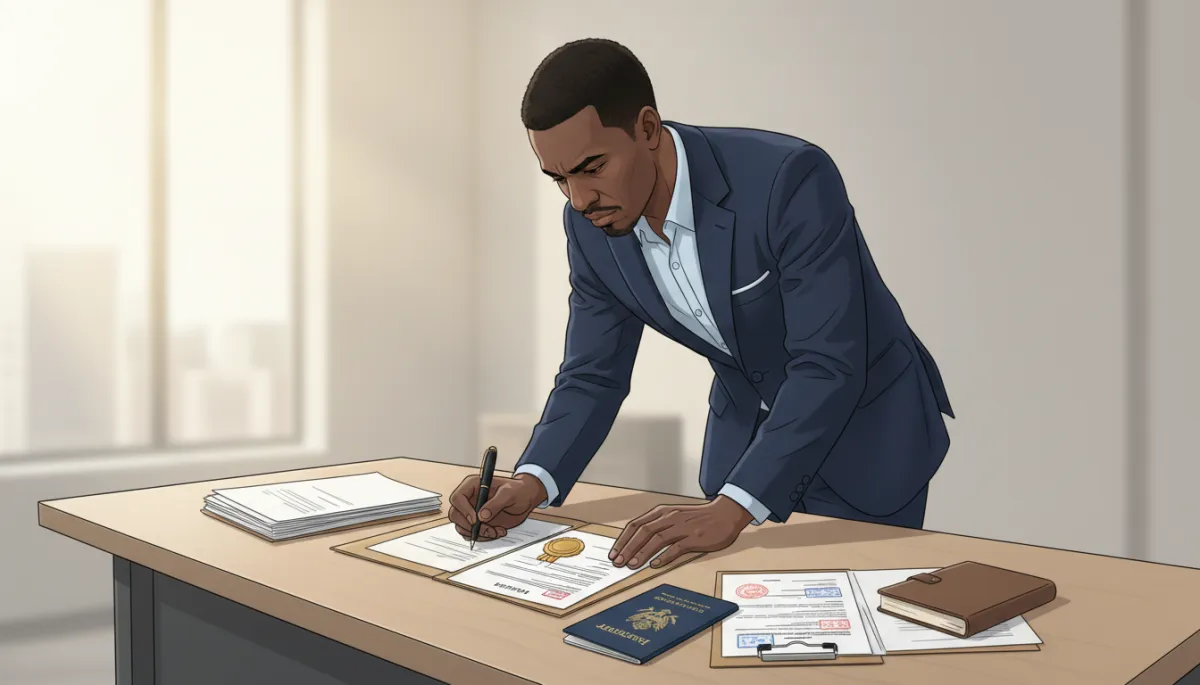
Avoid Costly Apostille Delays
Understand the most common mistakes before you submit your documents
1. Submitting the Wrong Type of Document
One of the most frequent apostille mistakes is sending the wrong version of a document. Many people assume that any copy will do, but apostille authorities are very strict about what they accept. In most cases, they will only apostille:
Original documents issued by a government office or court, or
Certified copies issued by the appropriate authority (notarized or registrar-stamped, depending on the document).
For example, a birth certificate printed at home from a hospital portal or scanned from an old family copy will almost certainly be rejected. Most countries require a recent “long-form” or “certified” version issued by the civil registry or vital records office. Similarly, for university diplomas, some authorities insist on a certified copy issued by the university registrar rather than the original framed diploma from your wall.
Before you apply, always check:
Does the receiving country require an original or will a certified copy suffice?
Is your document issued by the correct authority (e.g., state vs. federal, local registry vs. hospital)?
Is the document recent enough? Some countries only accept certificates issued within the last 3–12 months.
💡 Pro Tip: When in doubt, contact the foreign consulate or the institution that requested the apostille and ask exactly what type of document they expect. A short email can prevent a long delay.
2. Ignoring Country-Specific Requirements and the Hague Convention
Another common mistake is assuming that the apostille process is identical everywhere. The apostille system exists because of the Hague Convention of 1961, which simplified how documents are recognized between member countries. However, not every country is a member, and even among member states, local rules differ significantly.
First, verify whether the country where your document will be used is a party to the Hague Apostille Convention. If it is not, an apostille alone will not be enough. You will usually need a more complex process called “consular legalization,” which involves several steps and additional stamps from embassies or consulates. Sending an apostilled document to a non-member country and expecting it to be accepted is a recipe for rejection and rework.
Even when both countries are members, each has its own preferences. Some examples:
Certain countries insist on sworn translations performed in their territory, even if you already translated the document at home.
Others will only accept apostilles issued by a specific level of authority (for example, a national ministry rather than a regional office).
Some require that the apostille be less than a certain number of months old at the time of submission.
📌 Key Takeaway: Always confirm both that the destination country accepts apostilles and whether it has extra conditions for the type of document you are sending (civil records, academic, corporate, etc.).
3. Not Preparing the Document Correctly Before Apostille
Even if you have the right document, it may still be rejected if it is not prepared properly before you submit it. Apostille offices typically require documents to be clean, complete, and correctly signed or notarized. Common preparation errors include:
Missing or incorrect signatures: Notarized documents must include the full signature, seal, and wording required in your jurisdiction. If a notary forgets a date or uses outdated language, the apostille authority may refuse it.
Damaged or altered pages: Tears, stains, handwritten corrections, or staples removed and reattached can raise doubts about authenticity. In some cases, even minor damage can lead to rejection.
Improper notarization of copies: If you are apostilling a notarized copy, the notary must clearly state that they have verified the copy against the original, not simply witnessed your signature on a photocopy.

Careful pre-checks of signatures and seals prevent costly apostille rejections.
Before mailing or submitting your paperwork, go through a simple checklist:
Are all pages present and in the correct order?
Are seals, stamps, and signatures clear and legible?
If notarized, does the notarial wording meet current local regulations?
⚠️ Warning: Never attempt to “fix” a document yourself by adding extra handwriting, stamps, or unofficial marks. If something is wrong, request a fresh certified copy or a corrected notarization.
4. Overlooking Translation and Order of Steps
Many individuals are surprised to learn that the order in which you translate and apostille your documents matters. Doing these steps in the wrong sequence is a frequent and expensive mistake, especially for marriage, immigration, and academic applications.
In most cases, the apostille must be placed on the original document or its certified copy, not on the translation. The translation is then attached as a supporting document. If you apostille a translation that has no legal force on its own, the foreign authority may refuse it and ask for a new apostille on the original certificate instead. That means paying twice and waiting twice as long.
Another issue is using the wrong type of translator. Some countries require a sworn or certified translator who is officially registered with a court or government body. Others are more flexible and accept any professional translation. If you pay for a standard translation when a sworn translation is required, you may need to redo the entire process later.
Confirm whether the translation should be done in your home country or in the destination country.
Ask whether the translation itself needs to be notarized or attached to a translator’s affidavit before the apostille.
Make sure you understand if the apostille will be applied to the original document, the translator’s statement, or both.
💡 Pro Tip: Before ordering a translation, show the requesting authority a sample or ask them to confirm in writing how they want the translation and apostille arranged. This is especially important for visas, citizenship, and university admissions.
5. Underestimating Timelines, Fees, and Logistics
The final major mistake is treating the apostille as a last-minute errand. In reality, processing times can vary widely depending on the country, the region, and even the season. During busy periods—such as university graduation months or just before major holidays—offices may be overwhelmed, and standard processing can stretch from a few days to several weeks.
People often underestimate:
Mailing times: If you need to send documents to a central office in another city or country, factor in both outbound and return shipping, plus possible customs checks if crossing borders.
Multiple steps: Some documents must first go through local certification (e.g., a regional court or education ministry) before they are eligible for an apostille. Each step adds time and cost.
Extra copies and unexpected fees: If a document is rejected or lost, you may need to order new originals, pay rush fees, or use express courier services to meet your deadline.
📌 Key Takeaway: Start the apostille process as soon as you know you will need foreign documents—ideally several weeks or even months before visa appointments, weddings, or enrollment dates.
How to Protect Yourself from These Common Mistakes
While the apostille process can seem intimidating, a bit of planning goes a long way. To reduce stress and avoid the five common mistakes above, keep these practical steps in mind:
Create a simple checklist that covers document type, issuing authority, translation needs, and deadlines. Tick off each step as you complete it.
Communicate with both sides—the office that will issue or apostille your documents and the foreign authority that will receive them. Clear questions now prevent confusion later.
Keep copies and tracking numbers of everything you send. Scan your documents, save receipts, and use trackable shipping whenever possible.
Final Thoughts
An apostille is often just one item on a long to-do list when you are planning a move, marriage, study program, or new job abroad. Yet it is a crucial one: a small oversight can mean canceled appointments, missed deadlines, or even postponed life plans. By avoiding the five common mistakes—submitting the wrong type of document, ignoring country-specific rules, failing to prepare documents correctly, mishandling translations and order of steps, and underestimating timelines—you give yourself the best chance of a smooth, predictable process.
Take the time to research, ask questions, and organize your paperwork carefully. If your situation is complex or you are working with tight deadlines, consider consulting a professional apostille or legalization service that handles these details every day. With the right preparation, your documents can travel as smoothly as you do—and you can focus on the exciting reasons you are going abroad, rather than on paperwork problems.