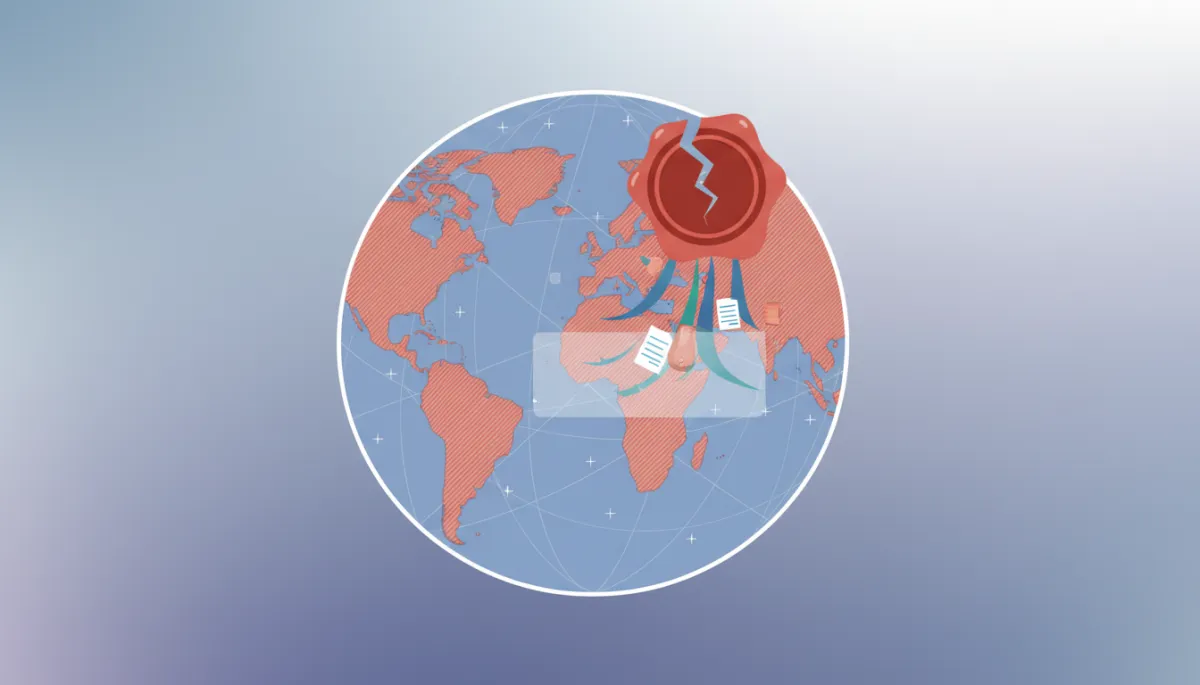
Countries That Don't Accept Apostilles: A Guide
Travel, Legalisation, Apostille
Countries That Do Not Accept Apostilles: A Practical Guide for Individuals
Moving abroad, getting married overseas, or studying in another country often means proving that your documents are genuine. Many people assume an apostille is always enough, but that is not true. Several countries do not accept apostilles at all, and arriving with the wrong type of legalisation can cause stressful delays, extra costs, or even visa refusals.
Not Every Country Accepts Apostilles
Understand where additional legalisation steps are required before you travel
What Is an Apostille and Why Doesn’t Every Country Use It?
An apostille is a special certificate attached to a public document (such as a birth certificate, degree, or marriage certificate) to confirm that it is genuine. It is used between countries that are members of the Hague Convention of 5 October 1961, often called the Hague Apostille Convention. When both countries are members, an apostille replaces the older, more complicated method of consular legalisation.
However, not all countries have joined this convention. If the country where you plan to use your document is not a member, authorities there generally will not accept an apostille as the final step. Instead, they usually require a process called consular legalisation, where their own embassy or consulate certifies the document after it has been authenticated by your home government.
💡 Pro Tip: An apostille is only valid if both the issuing country and the receiving country are members of the Hague Apostille Convention. Always check both sides.
Key Countries That Do Not Accept Apostilles
The list of non‑Hague countries can change as nations join the convention, so it is vital to confirm the latest status. At the time of writing, the following major destinations do not accept apostilles as the final form of legalisation and typically require consular legalisation instead. This list is not exhaustive, but it highlights some of the places individuals most often ask about.
Middle East and Gulf Region
United Arab Emirates (UAE) – Including Dubai and Abu Dhabi. Popular for work, business, and tourism, the UAE requires consular legalisation for most foreign documents, especially degrees, marriage certificates, and corporate papers.
Qatar – Frequently requires education and personal documents to be attested by the Qatari embassy or consulate after government authentication in the issuing country.
Saudi Arabia – Has strict rules for recognising foreign qualifications and civil status documents. Apostilles alone are not enough; consular legalisation is normally mandatory.
Kuwait, Bahrain, Oman – Other Gulf states that usually follow a similar consular legalisation process for foreign documents.
Asia and the Indian Subcontinent
China (People’s Republic of China) – Mainland China is not a member of the Hague Apostille Convention. Documents for work visas, marriage, adoption, or business must go through Chinese consular legalisation after being authenticated in the issuing country.
Vietnam – Typically requires consular legalisation for foreign documents, especially education and corporate paperwork.
Indonesia – Has its own procedures for recognising foreign documents; apostilles alone are usually not sufficient.
Africa and Other Regions
Most African countries – While a few African nations are Hague members, many are not. Countries such as Algeria, Egypt, Ethiopia, Kenya, Nigeria, and Tanzania often require consular legalisation rather than apostilles for foreign documents.
Canada – Canada is not a party to the Hague Apostille Convention. Instead, it uses a system of federal or provincial authentication followed by legalisation at the destination country’s embassy or consulate. If you are sending documents to Canada, an apostille from another country may not be recognised; Canadian authorities often require different forms of verification.

Consular legalisation adds an extra step after government authentication when apostilles are not accepted.
What This Means for You as an Individual
If you are an individual planning to live, work, marry, or study in a country that does not accept apostilles, you will need to follow a different path. The exact steps vary, but they usually follow the same general pattern:
Get the original document. This might be a recent certified copy of your birth certificate, a university degree, a criminal record check, or a marriage certificate. Some countries insist that the document is issued within the last few months.
Have it authenticated in your home country. Instead of an apostille, your document may need to be authenticated by the foreign affairs ministry (or equivalent) in the country where it was issued. In some places, this step is still called “legalisation,” but it is different from an apostille.
Visit the destination country’s embassy or consulate. After authentication, your document is usually taken (or sent) to the embassy or consulate of the country where you plan to use it. They confirm the previous authentication and apply their own stamp or sticker. This is the consular legalisation step that replaces an apostille.
Translate if needed. Many non‑Hague countries also require a sworn translation into their official language. In some cases, they only accept translations done by approved translators or within their own country.
Common Scenarios Where Apostilles Are Not Enough
1. Working in the Gulf States
If you accept a job offer in the UAE, Qatar, or Saudi Arabia, your employer will usually ask for your university degree, transcripts, and sometimes your marriage certificate if you plan to bring family. Many people send their degree for an apostille, only to discover the Gulf country does not accept it. Instead, the document must go through:
Verification or authentication in the country where the degree was issued
Attestation at the embassy or consulate of the destination Gulf state
Missing this step can delay your work visa and, in some cases, prevent you from taking up the job on time.
2. Marrying or Registering a Birth Abroad
Many individuals marry in countries such as China, Egypt, or Indonesia, or have children while living there. Local authorities may ask for:
A certificate of no impediment to marriage or single status certificate from your home country
Your birth certificate and sometimes your parents’ details
In non‑Hague countries, these documents nearly always require consular legalisation, not just an apostille. If you later need to register the marriage or birth back in your home country, having followed the correct legalisation path from the start can save a great deal of time and frustration.
3. Studying or Applying for Residency
Universities and immigration authorities in non‑Hague countries may ask for police clearance certificates, medical reports, and financial documents. Again, they often need to be authenticated and then legalised by the relevant consulate. Bringing only apostilled documents could mean having to start the process all over again from abroad, which is costly and time‑consuming.
How to Check Whether a Country Accepts Apostilles
Because international agreements change, you should never rely on an outdated list from a friend or an old website. Instead:
Visit the official website of your own foreign affairs ministry (or equivalent). Many publish up‑to‑date lists of Hague Convention members and explain whether they issue apostilles or authentications for certain destinations.
Check the Hague Conference on Private International Law website, which maintains the official list of countries that are parties to the Apostille Convention.
Contact the embassy or consulate of the country where you plan to use the document. Ask specifically whether they accept apostilles from your country, or if they require consular legalisation.
📌 Key Takeaway: Always confirm the requirements with an official source. What worked for someone a few years ago may no longer be valid today.
Practical Tips to Avoid Delays and Extra Costs
Start early. Consular legalisation can take weeks, especially if you need appointments at both your foreign affairs ministry and the destination country’s consulate.
Order extra copies. If you are going through a lengthy legalisation process, consider obtaining more than one certified copy of important documents such as birth or marriage certificates, in case one is lost or damaged.
Use reputable service providers. Many individuals choose to work with document legalisation agencies that are familiar with the requirements of non‑Hague countries. This can save time, but always check reviews and credentials carefully.
Keep copies and tracking numbers. Scan your documents before sending them and keep courier tracking details, especially when mailing passports or original certificates to embassies.
Final Thoughts: Plan Ahead When Apostilles Are Not Accepted
For many international moves and life events, an apostille is a simple and powerful tool. But if your destination country does not accept apostilles, relying on one can leave you with documents that officials politely but firmly reject. Understanding the difference between apostilles and consular legalisation, and knowing which countries fall outside the Hague system, gives you a real advantage when planning your next step abroad.
Whether you are relocating for work in the Gulf, marrying in Asia, or registering a child’s birth in Africa, take the time to confirm the exact legalisation route for your documents. That extra bit of preparation can mean the difference between a smooth, exciting transition and a stressful scramble to fix paperwork from thousands of kilometres away.
When in doubt, speak directly with the relevant embassy, consulate, or a trusted legalisation specialist. With clear information and enough time, you can navigate even the most demanding non‑Hague requirements and focus on what really matters: starting the next chapter of your life abroad with confidence.