
Do Documents Need Notarization? A Practical Guide
Legal Documents, Notarization, Personal Finance
Do Documents Need to Be Notarized First? A Practical Guide for Everyday Situations
Notarization can feel like one of those mysterious legal steps everyone mentions, but few people fully understand. Before you sign your next form, contract, or letter, it helps to know when a notary is actually required—and when it’s just optional peace of mind.
What Does It Mean to Notarize a Document?
Before answering whether documents need to be notarized first, it helps to understand what notarization actually is. A notary public is a state-authorized official who acts as an impartial witness when you sign certain documents. Their main job is to:
Verify your identity (usually with a government-issued ID)
Confirm you are signing willingly and understand what you’re signing
Add their signature, seal, and date to the document as proof of this verification
Notarization does not prove that the content of the document is true or fair. Instead, it proves that the right person signed it, at a specific time, under proper conditions. This is why banks, courts, and government agencies sometimes insist on notarized paperwork—they want added assurance against fraud or disputes.
Do All Documents Need to Be Notarized First?
In most everyday situations, the answer is no: documents do not automatically need to be notarized first. Whether notarization is required depends on:
What type of document it is (for example, a will vs. a casual agreement)
Who is asking for the document (a court, bank, school, or private person)
The laws in your state or country
Think of notarization as a special requirement, not the default. Many contracts and forms are perfectly valid with just the parties’ signatures—no notary involved—unless a specific law or organization says otherwise.
📌 Key Takeaway: A document only needs to be notarized if a law, court, or requesting party explicitly requires it. Otherwise, a regular signed document can still be legally binding.
Common Documents That Usually Do Need Notarization
While rules vary by location, certain types of documents are often expected—or required—to be notarized. If you’re dealing with any of the following, it’s wise to check notarization requirements early:
Real estate documents – Deeds, mortgages, home equity loans, and some lease or sale agreements often require notarization to be recorded or accepted by a county office or lender.
Powers of attorney – Documents that allow someone else to act on your behalf (for finances, healthcare, or legal matters) are frequently required to be notarized to be honored by banks, hospitals, or courts.
Some wills and estate documents – In many places, a will can be valid if it meets certain signing and witness rules, but notarization can make it “self-proving,” which simplifies matters for your family in court. Other estate forms, like transfer-on-death deeds, may specifically require notarization.
Affidavits and sworn statements – If you’re providing a written statement “under oath” for a court or government agency, it usually must be notarized so there’s proof of your identity and oath.
Some financial and loan documents – Banks and lenders sometimes require notarized signatures on certain loan forms, account changes, or beneficiary designations to prevent fraud.
For these types of documents, skipping notarization when it’s required can mean delays, rejection, or even the document being treated as invalid by the institution that needs it.
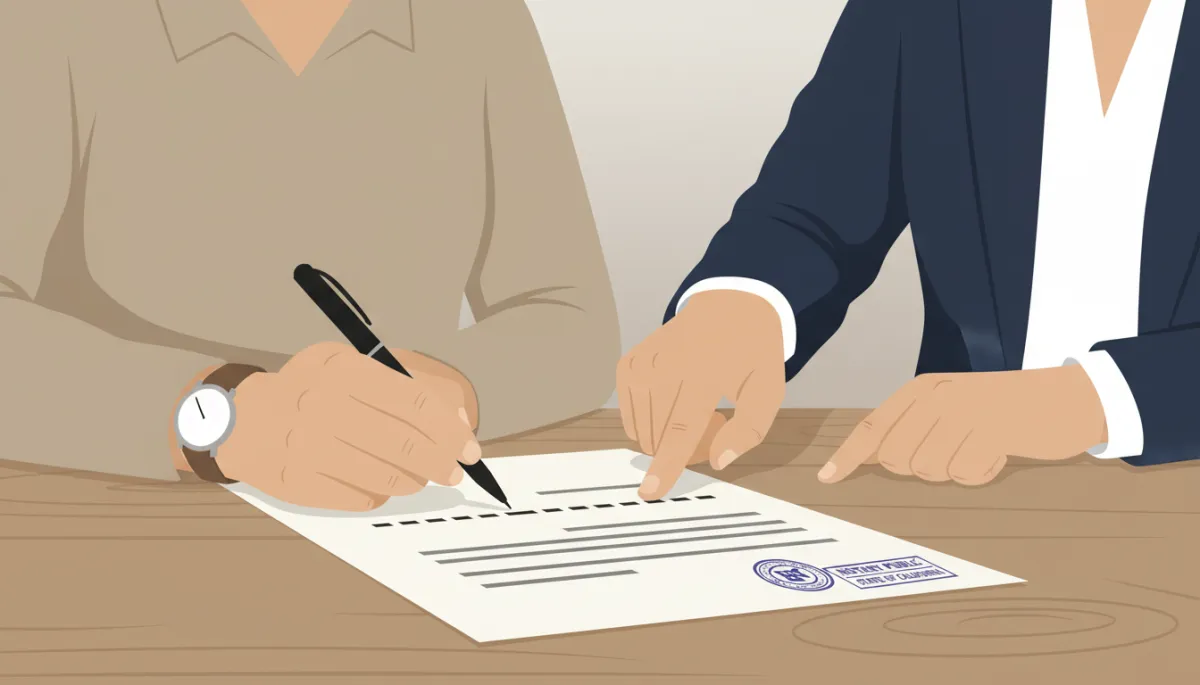
Real estate and power of attorney forms are among the most common documents that require notarization.
Documents That Usually Do Not Need to Be Notarized First
On the other hand, many documents people sign every day are legally effective without notarization. These often include:
Simple private contracts – For example, a written agreement to sell furniture, share expenses, or perform services. As long as both parties agree and sign, the contract can be enforceable without a notary, unless a specific law says otherwise.
Everyday business forms – Job offers, employment contracts, non-disclosure agreements, and rental applications are often signed without notarization, unless a company has its own policy requiring it.
Many school and medical forms – Permission slips, basic consent forms, and intake paperwork usually accept your signature alone, though some travel or medical authorizations for minors may require a notary.
Routine letters and statements – Letters of explanation, personal references, and informal agreements between friends or family rarely need notarization unless they will be submitted to a court or agency that insists on it.
In these cases, notarizing the document is usually optional. Some people still choose to do it for added credibility, especially if they worry the other party might later deny signing or challenge the agreement.
How to Tell If Your Document Must Be Notarized First
When you’re holding a form and wondering, “Do I need to get this notarized before I send it in?”, use this simple checklist:
Look for a notary section. Many forms include a clearly labeled “Notary Acknowledgment” or “Notary Certificate” block with spaces for a notary’s signature, seal, and date. If that’s present, the form is usually meant to be notarized.
Read the instructions carefully. Application packets, court forms, and government documents often state in bold or capital letters when a signature must be notarized. Don’t skip the fine print.
Ask the requesting party. If a bank, school, or agency asked you to submit a document, contact them and ask directly whether notarization is required. Requirements can differ even for similar-looking forms.
Consider the purpose. If the document gives someone significant legal or financial power, affects property, or will be used in court, there is a higher chance notarization is needed or strongly recommended.
💡 Pro Tip: When in doubt, call ahead. Confirming notarization requirements before you sign can save you from having to redo paperwork later.
Do Documents Need to Be Signed in Front of the Notary?
If a document does need notarization, timing matters. In most cases, you must either:
Sign the document in front of the notary, or
Personally appear before the notary and confirm that you already signed it and that it is your signature.
You usually cannot sign at home, send the document with a friend, and expect a notary to stamp it without ever seeing you. The whole point of notarization is that the notary personally verified your identity and willingness at the time of signing or acknowledgment.
What Happens If You Skip Notarization When It’s Required?
Failing to notarize a document that legally or officially requires it can have real consequences. Depending on the situation, you might face:
Rejection of your paperwork – A county recorder, court clerk, or bank may simply refuse to accept an unsigned or non-notarized document, forcing you to start over.
Delays in important processes – Real estate closings, loan approvals, or legal filings can be postponed while you correct the mistake, which may cost time and money.
Questions about validity – Even if a document is technically valid without notarization, the lack of a notary’s seal can make it easier for someone to challenge it later.
This is why it’s so important to confirm requirements in advance rather than assuming notarization is optional—or that it always comes first—across the board.
How to Get a Document Notarized Without Stress
If you do learn that your document must be notarized, the process is usually straightforward:
Find a notary. Many banks, shipping stores, law offices, and local government offices offer notary services. Some areas also allow online or mobile notaries who come to you or meet via video.
Bring valid ID. A driver’s license, passport, or other government-issued photo ID is typically required. The name on your ID should match the name on the document.
Wait to sign. Unless instructed otherwise, don’t sign the document until the notary tells you to. They may need to watch you sign or confirm your signature in person.
Pay the fee. Notaries usually charge a small fee per signature or per document, often regulated by state law.
Bringing It All Together: Do Your Documents Need Notarization First?
For individuals, the key is to remember that notarization is not automatic. Many documents you sign in daily life are valid without a notary. Others—especially those involving property, legal authority, or sworn statements—do need to be notarized, and often must be signed in front of the notary to count.
Whenever you’re unsure, pause and ask:
Is there a notary section on the form?
Do the instructions or the organization requesting it mention notarization?
Does this document significantly affect my rights, money, or property?
If the answer to any of these is “yes,” it’s worth confirming whether notarization is required before you sign. That small extra step can prevent headaches, delays, and disputes down the road—while giving you confidence that your important documents will be accepted when it matters most.