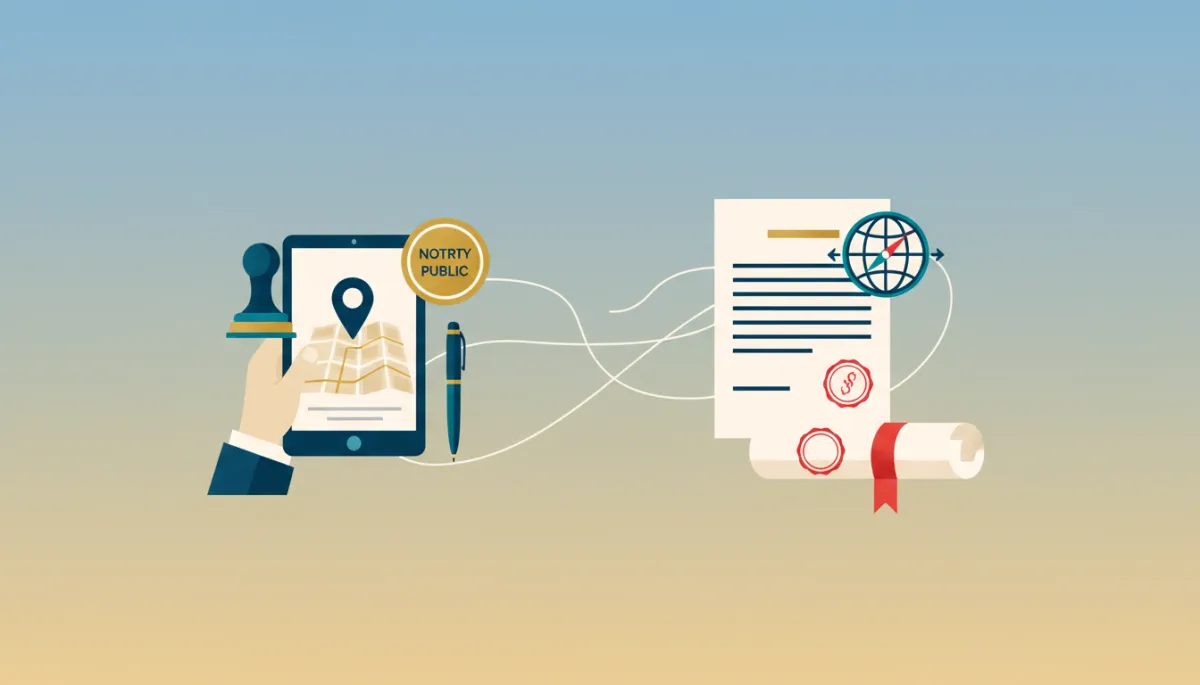
Mobile Notary & Apostille: Simplify Your Paperwork
Legal Services, Mobile Notary, Apostille
Mobile Notary + Apostille: Why They Work Together for Everyday Individuals
If you have ever tried to finalize paperwork for an overseas move, an international marriage, foreign study, or a property purchase abroad, you already know how quickly the process can become confusing. Two terms come up again and again in these situations: mobile notary and apostille. On their own, each plays an important role. Together, they can turn a stressful, time‑consuming chore into a manageable checklist item—especially for busy individuals juggling work, family, and travel plans.
What Is a Mobile Notary, in Simple Terms?
A notary public is an official appointed by the state to verify identities, witness signatures, and help prevent fraud. Traditionally you would go to a bank, law office, shipping store, or government building to find one. A mobile notary does the same thing—but comes to you.
Instead of rearranging your schedule to fit office hours, a mobile notary meets you where it is most convenient:
Your home or apartment, including evenings or weekends
Your workplace, so you can sign on a lunch break without losing hours in traffic
Hospitals, senior living communities, or care facilities for loved ones who cannot travel easily
Coffee shops, libraries, or any other safe, agreed‑upon public place
During the appointment, the mobile notary checks your identification, confirms that you understand what you are signing, and witnesses your signature. They then add their official seal or stamp. This notarization does not prove that the contents of the document are true; it proves that the correct person signed it willingly and properly identified themselves.
💡 Pro Tip for Individuals: Always have a valid, unexpired government‑issued photo ID ready—such as a passport or driver’s license—to keep your mobile notary visit quick and smooth.
What Is an Apostille and When Do You Need One?
An apostille is a special type of certificate used internationally. It is attached to a document so that foreign governments can trust that the signature, seal, and authority on that document are genuine. Apostilles exist because many countries, including the United States, are part of a treaty called the Hague Apostille Convention. This agreement created a standardized way for member countries to recognize each other’s official documents without lengthy embassy legalizations.
As an individual, you might need an apostille for documents such as:
Birth, marriage, or death certificates used abroad (for marriage, inheritance, or citizenship applications)
Powers of attorney needed in another country to handle property or financial matters
School transcripts, diplomas, or degrees for international study or job applications
Adoption paperwork, travel consent letters for minors, or immigration documents
In many cases, the foreign authority will specify that your document must be notarized first and then receive an apostille from the appropriate state or federal office. That is where the connection between a mobile notary and an apostille becomes so important.
Why Mobile Notary and Apostille Services Work So Well Together
Think of the process as a chain. The first link is a properly signed and notarized document. The second link is the apostille that confirms to another country that the notary’s signature and authority are valid. If the first link is weak—if a document is signed incorrectly or the notary’s information is incomplete—the apostille office may reject the request, costing you time and additional fees.
Mobile notary and apostille services complement each other in several powerful ways, especially from an individual’s perspective:
Convenience from start to finish. A mobile notary can meet you at home to notarize your documents correctly, and many also coordinate apostille processing on your behalf. You avoid multiple trips to offices, post offices, and government buildings.
Fewer mistakes. Professionals who regularly handle both notarizations and apostilles understand the exact wording, signatures, and seals that foreign authorities expect. This significantly reduces the risk of rejection or delays.
Time savings. When you are on a tight timeline—perhaps waiting on a visa, school enrollment, or a closing date abroad—every week matters. Combining mobile notarization with apostille service compresses the process into a more predictable schedule.
Peace of mind. Instead of trying to interpret international requirements on your own, you have a single point of contact who understands the full path your documents must travel.

Proper notarization is the first step toward a valid apostille abroad.
Real‑Life Situations Where Individuals Benefit from Both
1. Studying or Working in Another Country
Universities and employers overseas often ask for notarized and apostilled copies of diplomas, transcripts, and background checks. Instead of mailing sensitive originals back and forth or trying to coordinate with multiple offices, you can:
Schedule a mobile notary to certify your copies or witness your signature on required forms.
Have those notarized documents sent for apostille, either by you or through a service your notary recommends.
The result: your paperwork is accepted more quickly, and you can focus on travel plans instead of bureaucracy.
2. Buying or Selling Property Abroad
If you are purchasing a vacation home or selling an inherited property in another country, you may need to sign a power of attorney so a local representative can act on your behalf. That power of attorney usually must be notarized in your home country and then apostilled before it will be accepted overseas. A mobile notary allows you to sign everything from your living room, even if you are coordinating across time zones with your foreign attorney or real estate agent.
3. Family Matters, Adoption, and Travel with Children
International adoptions, guardianship documents, or consent letters for a child to travel with one parent often require both notarization and apostille. These are deeply personal situations, and having a mobile notary visit your home can feel more private and less stressful than sitting in a crowded office. Once notarized correctly, those documents can move on to the apostille stage and be recognized by foreign courts or agencies.
What to Expect When You Use Mobile Notary and Apostille Services Together
While every provider is different, most combined mobile notary and apostille experiences follow a similar pattern:
Initial contact. You briefly explain what the documents are for and which country will receive them. The provider confirms whether they need notarization, apostille, or both, and which government office will issue the apostille.
Mobile notary appointment. The notary travels to you, verifies your ID, and ensures the documents are signed and completed correctly for apostille purposes. This is where careful attention to detail pays off.
Apostille processing. Either you or the service submits the notarized documents to the Secretary of State or relevant authority. Once the apostille is attached, your documents are ready to be sent overseas.
📌 Key Takeaway: When you plan ahead and combine mobile notarization with apostille processing, you reduce last‑minute surprises and give yourself room to handle travel, shipping, or translation needs.
Tips for Individuals Choosing a Mobile Notary and Apostille Provider
Because your documents are personal and often time‑sensitive, it is worth choosing your provider carefully. As you compare options, consider:
Experience with international documents. Ask whether they regularly handle apostilles for the specific country you are dealing with. Requirements can vary, even among countries in the same region.
Clear pricing. Mobile notaries usually charge a travel fee plus a per‑signature fee, and apostille services often add government fees and shipping. Transparent quotes help you avoid surprises.
Communication. Look for someone who explains the process plainly, answers questions, and provides realistic timeframes. Good communication is especially important when you are coordinating with relatives or professionals overseas.
Bringing It All Together: A Simple Path for Complex Paperwork
For many individuals, the words mobile notary and apostille only appear at major life moments: a move to a new country, a marriage abroad, an adoption, a new job, or the sale of a family property. These are already emotional, busy transitions. Trying to decode unfamiliar legal terms and navigate multiple offices on your own can quickly feel overwhelming.
When you use mobile notary and apostille services together, the process becomes more manageable: the notary comes to you, prepares your documents correctly, and the apostille confirms their authenticity across borders. Instead of chasing signatures and stamps, you can focus on the reason behind the paperwork—a new chapter in your education, career, or family life.
If you are facing a stack of forms with instructions that mention both notarization and apostille, you do not have to handle it alone. Reach out to a reputable mobile notary who understands apostille requirements, explain your situation, and let them guide you step by step. With the right support, international paperwork does not have to stand in the way of your plans.